
Author: Ankur Sadhwani
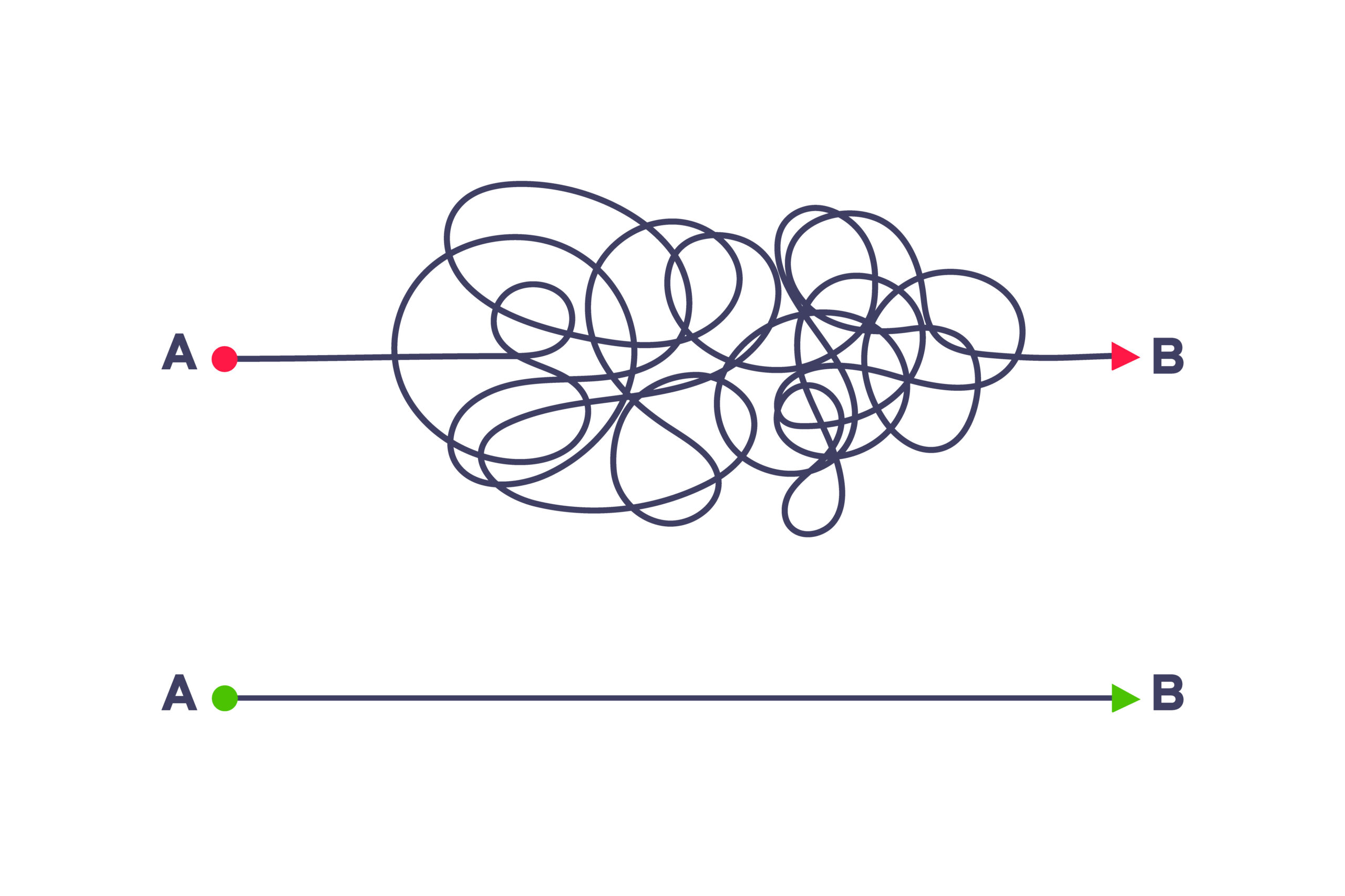
In the not-for-profit space, complexity tends to creep in quietly. As organisations grow and take on more initiatives and well-meaning changes, new roles, processes, and systems, often accumulate. Over time, this results in duplication, inefficiencies, and a sense of constant busyness that does not always translate into impact. The Power of Simplification in Not-for-Profits is really underplayed in the pressure to service our communities.
At Spark Strategy, we believe that organisational simplification is one of the most powerful tools a not-for-profit can use to enhance its effectiveness. On average, simplification can lead to up to 15% in cost efficiencies, but more importantly, it creates space for innovation, staff wellbeing, and long-term alignment with your purpose.
However, simplification is not about cost-cutting. It is about taking a value-based view of your operations, and focusing time, energy, and resources on the things that matter most to the people and communities you serve.
Why simplification matters
When organisations simplify, they do not just become leaner, they become smarter, more adaptable, and easier to scale. At Spark, we approach simplification across three interconnected areas: organisation design, process simplification, and ways of working.
Simplifying the Organisation’s Design: complexity slows you down
As not-for-profits evolve, their structure often becomes more complex. New teams emerge to solve emerging challenges, but sometimes these layers introduce overlap and blurred accountability. This leads to slower decisions, more meetings, and staff being unsure who is responsible for what.
We have seen many not-for-profits with a large number of teams managing relatively small groups of staff. This often creates unnecessary layers of leadership, coordination challenges, and confusion around accountability. When structures become too fragmented, decision-making slows down, and collaboration becomes harder. Simplifying the design means consolidating teams with similar functions, clarifying reporting lines, and ensuring the structure supports, rather than hinders, the delivery of your purpose.
One practical way to approach this is by applying a MECE-style (Mutually Exclusive, Collectively Exhaustive) lens to roles and responsibilities, ensuring that activities are not duplicated and that all critical functions are covered without overlap. Another approach is to review job families, and the skills required across the organisation. By aligning similar roles under coherent job families and assessing capability needs, organisations can reduce structural redundancy and build a more scalable and purpose-aligned workforce.
Process Simplification: The path that got you here may not take you forward
The biggest gains we see often come from streamlining processes. Just because a certain way of doing things worked five years ago does not mean it is right for today.
Many not-for-profits find themselves weighed down by outdated workflows, manual approvals, or duplicated tasks across teams. By mapping activities against a value lens and looking at how much effort each task requires and what it contributes. The Power of Simplification in Not-for-Profits is embedded in their ability to see where technology could play a role to bring efficiency, simplify, or even stop certain tasks altogether.
By assessing activities through a value and effort lens, organisations can quickly visualise where energy is being well spent and where it is not. When mapped this way, activities typically fall into four quadrants:
- High Value, Low Effort: These are yoursweet spots. These tasks create strong impact while requiring relatively little time or resource. Often, organisations realise they are under-investing in these areas, and that shifting more focus here can unlock big returns without additional strain.
- High Value, High Effort: This is where most not-for-profits spend the bulk of their time. These arecritical activities, but they come with a heavy workload. The key here is to look closely for efficiency gains, through smarter tools, delegation, or redesign. The challenge is to reduce effort without sacrificing value. This is often where the biggest productivity wins are found.
- Low Value, Low Effort: These are often suitable fortechnology solutions. While these tasks may not be critical, they still need to get done. Automating or streamlining these activities through systems like CRMs, templates, or self-service tools can free up valuable time.
- Low Value, High Effort: This is the danger zone. These activities consume a lot of energy but deliver little return. From an efficiency perspective, this is themost critical quadrant to focus on. These tasks often exist due to legacy processes, compliance overreach, or organisational habit. They are ripe for elimination, redesign, or reallocation.
By categorising activities in this way, organisations can make evidence-based decisions on where to invest, where to improve, and where to let go. Importantly, this process also creates shared understanding among teams and surfaces hidden inefficiencies that may otherwise go unaddressed.
Technology can absolutely help, but process simplification is not about software alone. It is about redesigning how the work gets done, with clarity, speed, and value at the centre.
Simplifying the Ways of Working: skills and culture must evolve too
Ways of working go beyond structure and process. It is about how people collaborate, solve problems, and deliver outcomes. Often, the root of inefficiency is not the structure or process, it is a mismatch between current skills and future needs, or an organisational culture that resists change.
In some organisations, what appears to be a capacity issue could actually be a capability issue. The solution is not always hiring more people. It might be about investing in skills development, clarifying roles, or enabling more assertive and accountable ways of working.
When ways of working are simplified and modernised, staff engagement lifts, frustration declines, and the whole organisation moves more confidently towards its purpose.
Signs your organisation might need simplification
The Power of Simplification in Not-for-Profits is not just for large, complex organisations. Here are some key hints that your organisation may be ready for it:
- Are your team members constantly busy, but outcomes feel slow or unclear?
- Do multiple people seem to be doing similar work across different teams?
- Are decision-making processes delayed by layers of approvals?
- Is it difficult to understand who owns certain responsibilities?
- Do staff express frustration about inefficiencies or unclear workflows?
- Are the same skillsets repeated across teams with little variation?
- Have you invested in new systems or roles but not seen the expected benefits?
- Do leaders spend more time reacting to issues than planning ahead?
If you nodded to several of these, simplification could be a strategic unlock.
If you enjoy reading articles like this and want to be kept updated with our free resources, join our newsletter. We will send regular, informative, and helpful content. You can also read more content here.