
Author: Ankur Sadhwani
Better Operations: Crafting a Sustainable Operating Model for Non-Profits
Where to start in crafting sustainable operating models? Having worked as a strategy and insights professional for 20 years, you can imagine that I have seen my fair share of sustainable operating model projects – especially with non profits.
From a large global professional services firm aiming to enhance efficiency by reducing its indirect costs, to a Primary Health Network (PHN) transitioning towards Value-Based Care. From an energy organisation navigating post-merger integration, to a member-based peak body adopting a new business model.
Even where the goals of projects were the same, their scopes often differed. Some organisations opted to review all the operational model elements—processes, organisational structure, capabilities, location, information systems and technology, suppliers, and governance—while others focused solely on people and processes.
While the objectives and scope of these projects varied, common goals included performance uplifts, efficiency drives, realignment to a new strategy, and deeper customer or community connection. Regardless, each project’s new model design succeeded because we ensured that we used an overarching framework that was modular and adaptable.
In this article, I’ll share insights from these experiences, with a particular focus on non-profit organisations. The non-profit sector encounters dynamic challenges due to fluctuating funding, stringent regulatory demands, and a competitive environment.
At Spark Strategy, we maintain that good strategic thinking can uncover as many growth opportunities as the challenges you face. In this article, I also try to touch upon an often-overlooked aspect of operating models—Wellbeing at work—emphasising its importance in contemporary organisational strategies. We are preparing for a detailed blog on Wellness Oriented Target Operating Model (WOTOM) that will be available soon!
What is an Operating Model?
An operating model acts as the essential bridge that connects an organisation’s strategic plans into practical operational capabilities and eventually to its tangible outcomes. It functions as the structural basis for implementation and offers explicit direction to both the enterprise leadership team and operational staff.
Within the non-profit sector, customising the operating model to closely match strategic objectives and equity considerations is crucial. This ensures the model not only supports but also enhances the organisation’s ability to make key decisions and harness its capabilities effectively.
Why Redesign the Operating Model?
First off, many not-for-profit organisations lack a well-documented operating model. This absence often leads to high inconsistency across the organisation, manifesting in duplicated efforts and a general lack of clarity. Imagine, without clear direction, several people watering the same tree at different times of the day; not only is this inefficient, but it can also hinder the tree’s growth rather than helping it. Or consider the frustration of covering a one-hour distance between points A and B in two hours, simply because you’re not aware of the right road that leads to your destination.
Non-profits typically reevaluate their operating models for several key reasons, some of the most common ones include:
- Strategic Alignment: Ensuring the organisational structure and resources align perfectly with evolving strategic objectives.
- Efficiency Optimisation: Identifying redundancies to streamline operations, maximising resources and impact.
- Innovation Facilitation: Creating an environment that encourages innovation, keeping the organisation ahead of societal needs.
- Adaptation to Change: Responding proactively to external changes such as economic shifts, technological advancements, or new regulatory requirements.
How do we understand and document the operating model?
Understanding and documenting an operating model involves leveraging frameworks that encapsulate all the elements critical to evaluating and enhancing how an organisation functions. Among the various frameworks available, my preference leans towards the POLISM framework, which I find comprehensive. Here’s a breakdown of how the POLISM framework addresses each component of the operating model:
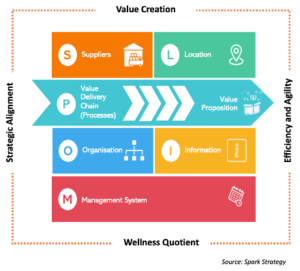
- Processes: This involves a thorough assessment of existing processes to pinpoint inefficiencies and areas ripe for improvement. It’s about mapping out the essential work steps required to deliver the organisation’s products and services, as outlined by its strategic goals.
- Organisation: The focus here is on ensuring that the organisational structure and the skills within the workforce are in harmony with strategic needs. This covers defining who will perform the work, how they will be structured within the organisation, the support they will require, how they will be recruited, motivated, and the values that will guide their behaviour.
- Location: It entails deciding where the work will be performed and what physical assets, like buildings, are necessary for these locations. This element also considers the logistical setup to optimise the balance between remote and office work.
- Information Systems: It’s crucial that information systems enhance productivity and integrate seamlessly with new workflows. This includes determining the required data and applications, identifying the ‘business owners’ of these systems, and ensuring they support the work efficiently.
- Suppliers: This involves evaluating whether services should be in-house or outsourced to align with strategic goals, along with determining what type of relationships the organisation will maintain with these external suppliers.
- Management Systems: This component assesses the need for processes in planning, budgeting, performance management, people assessment, risk management, and continuous improvement. It also involves setting a calendar of meetings to connect these processes and developing a scorecard to assess organisational progress.
Encircling this framework, I envision a boundary marked with four key design principles that I believe are critical when crafting a new operating model. These principles serve as constant reminders of the questions we must consider during the design process:
- Strategic Alignment: Is the operating model aligned with the organisational strategy and goals?
- Efficiency and Agility: Does the new operating model enhance efficiency and increase agility?
- Value Creation: Most importantly, how does the new operating model create value for our stakeholders and the community?
- Wellness Quotient: Have we integrated a wellness quotient throughout the various elements of the operating model canvas? The integration of a Wellness Quotient into each facet of the POLISM framework is become crucial, reflecting the growing importance of mental health and employee wellbeing.
What is the roadmap to developing an Operating Model?
With a clearly defined strategy in place, the development of an operating model requires significant collaboration and time commitment from the organisation. It’s crucial that the process isn’t seen as something an external consultant can do alone. Involving the right people in the design teams and preparing them adequately is essential. Executives must not only be experts in their fields but also need to be receptive to new, creative design solutions, entertaining the possibility that there might be alternative approaches that could prove more effective.
How long should it take? Ideally, a well-planned operating model redesign should take 12 weeks, not 12 months! It is crucial for teams to spend adequate time understanding the model and exploring alternatives. However, they should also feel the pressure of time constraints to avoid falling into analysis paralysis. Quick progress in the design phase can energise stakeholders and allows more time for implementing subsequent changes. Although some initial decisions may prove incorrect, it is important to remain flexible and adjust decisions as needed. A successful example I observed in a not-for-profit organisation was when the CEO declared that decisions would be made at the end of 12 weeks regardless of consensus, emphasising the importance of moving forward.
A Typical Roadmap for an Operating Model Project:
As I called out in the article earlier, while the need for an operating model or the framework to document it might differ, the roadmap is largely consistent.
- Agree on Design Principles: Establishing design principles at the outset is fundamental. These principles guide the team’s work and narrow down their options, which is especially crucial to prevent endless debates and delays. Design principles translate broad strategic goals into actionable guidance for design teams. For instance, principles might stipulate that “employee wellness and safety is paramount” or “creating stakeholder value is of utmost importance.”
- Map the Current State Operating Model: A clear understanding of the existing operating model is essential. This helps teams recognise best practices and adopt these rather than starting from scratch. Documenting the current state also highlights areas of frustration and inefficiency, providing a foundation for developing superior solutions.
- Identify Gaps: After the initial mapping of the current state operating model, the next step involves a detailed examination to identify discrepancies between the existing operations and the strategic goals. Collaborate closely with the executive team and broader organisation to pinpoint these gaps and understand their underlying causes. This analysis helps in highlighting inefficiencies, redundant processes, and areas lacking capabilities that are critical for achieving strategic objectives.
- Creation of Direction Setting: Building on the insights gained from identifying the gaps, the next phase is to define a clear direction for the new operating model. Establishing this direction acts as a guiding beacon for all subsequent design and implementation efforts, ensuring that every change contributes towards the strategic end goals.
- Co-design the Operating Model:With a clear direction in place, the process moves to the collaborative design phase. Engaging with a diverse group of stakeholders, utilise the POLISM framework to ensure that all elements are interconnected and mutually reinforcing. The collaborative approach fosters a sense of ownership among participants but also leverages their collective expertise to create a robust design.
- Develop Options:Following the co-design phase, the next step is to develop options for applicable POLISM elements (for instance, organisation construct, supplier matrix, location etc) for the new operating model. Each option is crafted detailing the advantages and disadvantages. This comparative analysis helps the decision makers understand the potential impacts of each option, making the decision-making process more informed and nuanced.
- Finalise the Model:The final step in the developmental roadmap is to review and evaluate the developed options with executives and key stakeholders. Using stress testing, facilitate discussions and workshops to delve deep into the implications of each option, considering factors like feasibility, cost, impact, and alignment with strategic goals.
Conclusion
In conclusion, designing a responsive operating model is vital for non-profit organisations to effectively meet internal and external challenges. By ensuring the model aligns with the organisation’s needs and enhances community impact, non-profits can thrive in a competitive environment. The addition of a wellness focus further prepares organisations to support their most valuable asset—their people—ensuring they are equipped to face future challenges.
As I had alluded to in the article earlier, we will discuss the implementation and change management of an operating model in a separate blog.
Please contact us at info@sparkstrategy.com.au for a complimentary conversation about how Spark Strategy can help you navigate these new models for your workplace.
If you enjoy reading articles like this and want to be kept updated with our free resources, join our newsletter. We will send regular, informative, and helpful content.

George is the Founder and Director of Spark Strategy and brings 30 years of experience in the strategic development of not-for-profit and public sectors organisations. He is one of Australia’s most experienced sector strategists and facilitator. George excels at helping organisations move from complex challenges to clear direction. He combines deep sector knowledge with genuine, long-term partnerships that drive meaningful and lasting impact. George is passionate about developing strategic thinking in leaders and boards and is the author of Spark Change, a practical guide to building strategic capability in the social sector and was a Business Book of the Year finalist.
Credentials
- 30+ years strategic advisory and facilitation experience
- Founder & Director, Spark Strategy
- MBA, Melbourne Business School
- GAICD
- Seasoned Board Chair