Author: Ankur Sadhwani
I recently wrote a detailed article focused on Developing an Operating Model for Non-Profit Organisations. Now its time to zoom in on how to structure up your own, Roadmap to Developing an Operating Model
The article covered essential topics like the definition and significance of an operating model, the reasons for redesigning it, understanding and documenting it using the POLISM framework, and the incorporation of a Wellness Oriented Target Operating Model (WOTOM).
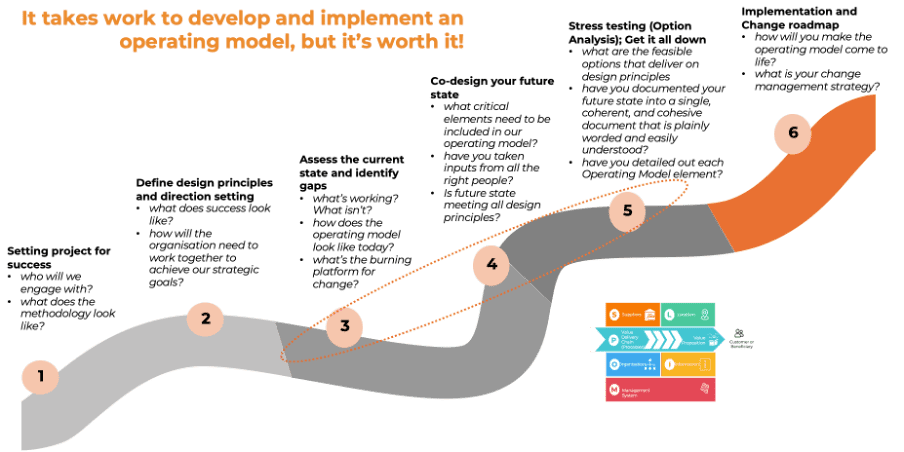
In this shorter blog, we cover the roadmap to develop an operating model, and the key steps involved. It’s crucial to understand and agree on this roadmap before starting the process to ensure clarity and alignment of objectives, which in turn facilitates smoother execution and better outcomes.
Setting the Project for Success
- Initiation & Engagement Planning Start by engaging key stakeholders and defining the project scope. This initial step is about securing buy-in and setting clear expectations. It’s crucial for aligning the efforts of various contributors and for the strategic deployment of resources.
- Initial Research & Discovery Conduct thorough research to understand industry standards, emerging trends, and benchmarks. This phase should also include internal data collection to grasp the existing operational context, which will inform the redesign process.
Define Design Principles and Direction Setting
- Establish design principles that reflect the organisation’s values and strategic objectives. These principles will guide the development of the operating model, ensuring that it aligns with the organisation’s long-term goals and operational realities.
Assess the Current State and Identify Gaps
- Assess Current State Map out the current operating model in detail using the POLISM framework. This involves documenting existing processes, organisational structures, resource allocations, and technological capabilities to understand the baseline operations.
- Detailed Gap Analysis Against Design Principles Analyse the current state against the newly defined design principles to identify discrepancies. This analysis will highlight areas where the current operations fall short of the envisioned model, providing clear targets for improvement.
- As-Is Report Development and Review Compile an “As-Is” report that consolidates findings from the current state assessment and gap analysis. Review this report with stakeholders to validate the findings and refine the focus areas for the operating model redesign.
Co-Design Your Future State
- Prepare and Present Foundational Draft Future State Develop a preliminary draft of the future state operating model based on the insights gained from earlier phases using the POLISM framework. This draft should propose new or revised elements that address identified gaps and align with strategic objectives.
- Targeted Executive Involvement in Refining Each To-Be OM Element Engage executive alignment to refine each element of the proposed future state. This targeted involvement ensures that strategic directions and operational capabilities are cohesively integrated.
Stress Testing (Option Analysis)
- Options Analysis Explore multiple configurations of the operating model elements to determine the best fit for organisational needs. Analyse each option’s feasibility, potential impact, and alignment with strategic goals using the POLISM framework.
- Documentation of the Operating Model Formalise the chosen operating model by documenting detailed descriptions of all elements, including processes, organisational structures, technology use, and governance frameworks.
Get It All Down: Implementation and Change Roadmap
- Implementation Roadmap Develop a detailed implementation roadmap that outlines the steps, timelines, and resources required to transition from the current to the future state. This roadmap should also identify milestones for tracking progress and managing the change.
- Change Plan Prepare a comprehensive change management plan that addresses the human and cultural aspects of transitioning to the new operating model. This plan should include communication strategies, training programs, and support mechanisms to ensure smooth adoption across the organisation.
Conclusion
By following this structured roadmap, non-profit organisations can effectively redesign their operating models to enhance strategic alignment, operational efficiency, and overall impact. Importantly, this transformation is achievable within a 12-week period, not 12 months, ensuring quick progress and maintaining momentum.
This proactive approach ensures that organisations not only adapt to current challenges but are also well-prepared for future demands.
If you enjoy reading articles like this and want to be kept updated with our free resources, join our newsletter. We will send regular, informative, and helpful content. You can also read more content here.

George is the Founder and Director of Spark Strategy and brings 30 years of experience in the strategic development of not-for-profit and public sectors organisations. He is one of Australia’s most experienced sector strategists and facilitator. George excels at helping organisations move from complex challenges to clear direction. He combines deep sector knowledge with genuine, long-term partnerships that drive meaningful and lasting impact. George is passionate about developing strategic thinking in leaders and boards and is the author of Spark Change, a practical guide to building strategic capability in the social sector and was a Business Book of the Year finalist.
Credentials
- 30+ years strategic advisory and facilitation experience
- Founder & Director, Spark Strategy
- MBA, Melbourne Business School
- GAICD
- Seasoned Board Chair