
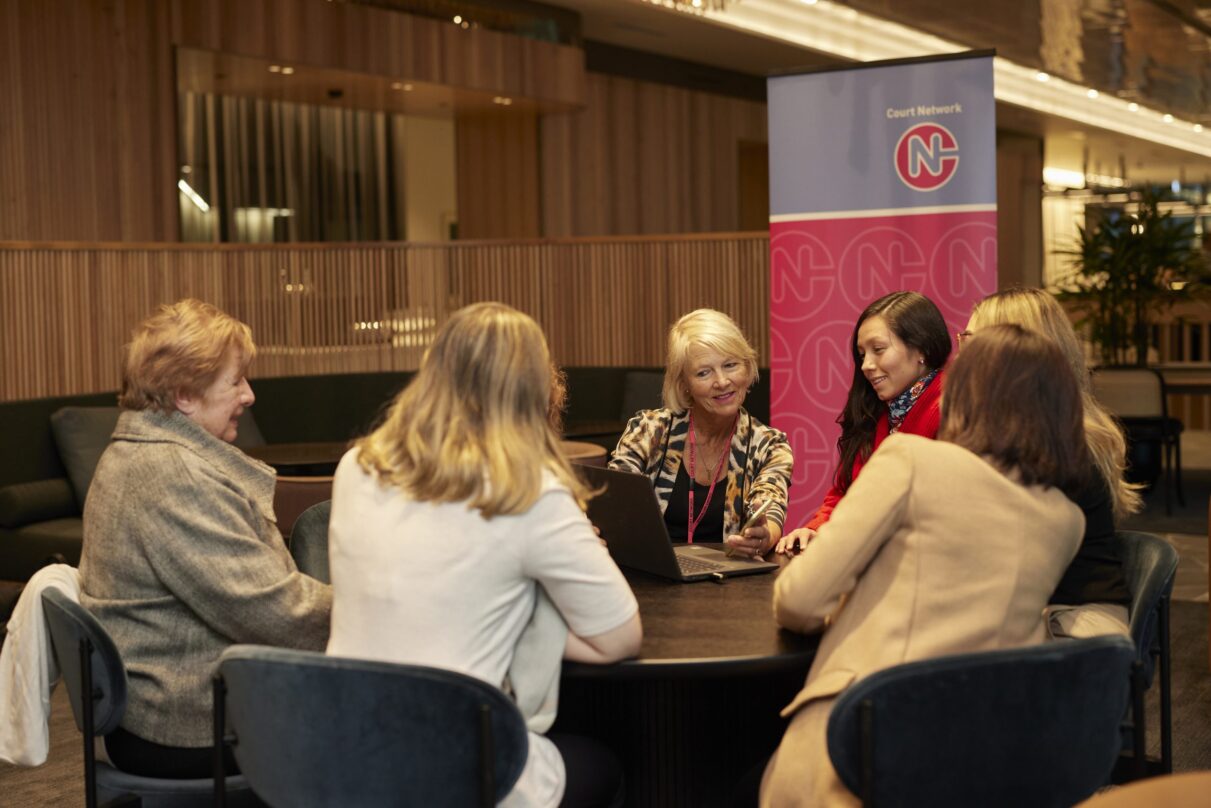
Court Network has long been a quiet force in the Victorian and Queensland justice systems — not through legal power or courtroom theatrics, but through human connection.
Their model is simple and powerful: volunteers with a deep desire to serve, support people going through the courts. That includes victims, witnesses, families, and even defendants — anyone who needs someone to stand beside them in a system that can feel bureaucratic, dehumanising, or overwhelming.
But as societal needs have shifted and the justice landscape has evolved, so too has the organisation’s role, its pressures, and its strategy. When Spark Strategy partnered with Court Network to support the development of a new strategic plan, it wasn’t just a paper exercise. It was a chance to reimagine how this vital service remains relevant, sustainable, and high-impact — now and into the future.
Here’s their story.
A Legacy of Listening: The Origins of Court Network
Court Network began with a powerful insight: going to court, even for something relatively minor, is often one of the most stressful days in someone’s life. What began in the 1980s as an initiative to support women in court has expanded to cover a broad range of people across Victoria and Queensland. Today, Court Network has hundreds of trained volunteers working in over 30 courts.
The core service model remains unchanged: providing non-legal information, emotional support, and referral. But the world around that model has shifted dramatically.
The Current Challenge: High Demand, Low Resources, Growing Complexity
Court Network operates at the intersection of some of society’s most difficult challenges — domestic and family violence, mental health crises, housing insecurity, and systemic discrimination. And like many not for profits, they’re being asked to do more with less.
Three key pressures became the focal points of our strategic planning work together:
- Increasing Complexity of Need: People coming to court now often have compound trauma, overlapping service needs, and limited support networks. This pushes Court Network to act not just as a service, but as a coordination point — often beyond their funding or remit.
- Volunteer Model Under Pressure: Recruiting, training and supporting volunteers in a post-COVID world — especially in a climate of burnout and changing expectations — is increasingly difficult. The organisation needed to refresh its approach to volunteering and workforce wellbeing more broadly.
- Government Expectations Rising: Funders are increasingly focused on outcomes, not just outputs. That means Court Network must articulate its impact more clearly and demonstrate alignment with system-wide reform agendas like access to justice and therapeutic jurisprudence.
Strategy as a Signal: Court Network’s Turning Point
When Court Network approached us, they were ready for more than another strategic plan.
Through our PRISM approach — Spark’s strategic planning method tailored for not for profits — we helped them build a strategic framework that balances realism with ambition, evidence with empathy.
This wasn’t a one-way consulting process. We co-designed every element with Court Network’s leadership, frontline staff, and — crucially — volunteers.
Case Study 1: Designing for Impact — Not Just Activity
One of the most powerful moments in the process came during our impact mapping session. Volunteers described moments when court users burst into tears just from being acknowledged. Staff shared how they’ve been asked to help interpret safety plans, connect people to mental health supports, or advocate for access needs.
We helped Court Network move from anecdote to impact logic. Together, we developed a clear impact chain that tied day-to-day work to three outcomes:
- People feel heard, safe, and supported in court.
- Courts become more person-centred and accessible.
- Systemic justice gaps are made visible and can be addressed.
Case Study 2: A Volunteer Model Reimagined
Through the process, Court Network was able to innovate around how they recruit, retain, and support volunteers.
The strategic plan now includes a roadmap to:
- Expand the volunteer model to include more flexible roles and digital participation
- Invest in wellbeing tools and peer support structures
- Leverage the incredible insights and lived experience of volunteers in service design
The result? A model that honours the legacy of volunteerism while modernising it for current conditions.
Case Study 3: A Role in Reform
Court Network operates in a justice system that’s under reform pressure — from therapeutic court models to increasing calls for culturally appropriate services.
Rather than shy away, Court Network will lean into its role as a critical enabler of reform. Their community-based lens, combined with deep court access, allows them to surface real-time feedback and insights that can shape system change.
Key Takeaways for Not for Profits
Court Network’s journey offers a blueprint for other community-based not for profits navigating complex operating environments.
Three lessons stand out:
- You can honour your legacy and evolve. The past is a strength — if it’s brought into the present intentionally.
- Strategy is a team sport. Engaging staff, volunteers, and stakeholders throughout ensures buy-in and relevance.
- Impact must be measurable — but not robotic. Court Network didn’t reduce its work to metrics. It translated its humanity into strategic language funders and policymakers can understand.
Spark Strategy’s Role
At Spark, we don’t do cookie-cutter strategy. Every not for profit we work with is different — in mission, in mood, in moment.
Our job is to bring tools, challenge thinking, and leave organisations stronger than we found them.
With Court Network, our PRISM methodology for not for profit strategic planning helped unlock clarity, confidence, and direction at a time when all three were in short supply.
Final Word
Court Network’s future is about more than courtrooms. It’s about voice, safety, belonging, and system change. And with a renewed strategic foundation, they’re better equipped than ever to meet this moment.
If your not for profit is navigating similar shifts — increased demand, reduced resources, rising complexity — and your strategic plan needs a reset, let’s talk.
Because quiet failure is avoidable.
Author: George Liacos
If you enjoy reading articles like this and want to be kept updated with our free resources, join our newsletter. We will send regular, informative and helpful content. Or if you want to hear about other organisations in the social sector that we have support, please click here.